
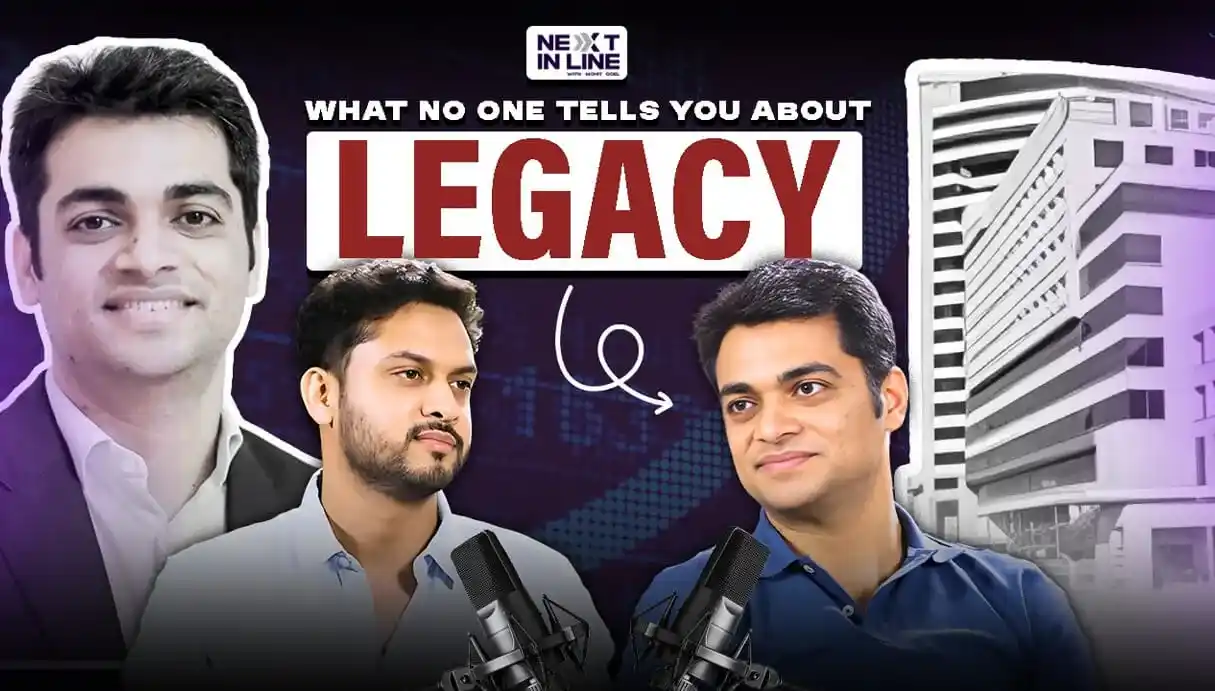
Nimish Arora on Redefining Family Business in India
In India, family businesses are the backbone of the economy — from iconic real estate empires to legacy consumer brands. Yet, there’s an old saying:
“The first generation builds it. The second generation manages it. The third generation ruins it.”
But what if that cycle could be broken?
What if a next-gen leader could carry forward a legacy business while reinventing it for the future?
That’s exactly what Nimish Arora is trying to prove. In his candid conversation on Nexxt in Line, he reveals the untold challenges of succession, the realities of working with his father, and what it truly takes to convert inherited legacy into built leadership.
Competing Against Giants: Outbidding DLF
One of Nimish’s standout moments came when his company outbid DLF – one of India’s largest real estate developers – in a record-breaking DDA auction.
This was more than a business deal. It was a message: a legacy business can still be ambitious, competitive, and future-focused.For many second-generation entrepreneurs, achievements like these aren’t just about money. They’re about earning credibility – proving to peers, competitors, and even family that you’re not just “the son of the founder.”
The Father-Son Equation in Family Business
Every family-owned business comes with its share of dynamics. For Nimish, working with his father has evolved from being personal to being professional.
“Working with dad, I would say it’s now more a work relationship than a father-son relationship.”
While respect for the first generation is non-negotiable, communication gaps, generational differences, and decision-making styles often create friction. Nimish admits he’s still learning to navigate this balance, but it’s a reality every next-gen leader in a legacy business must face.
Legacy vs. Entitlement: The Real Test of Next-Gen Leaders
One of the sharpest insights from Nimish’s episode comes from a common stereotype about family businesses: entitlement.
He says, “Next-gen starts thinking she’s entitled. She doesn’t have the ability to open her fist with her own hands.”
The danger for many second-generation leaders is believing that legacy guarantees success. Nimish challenges this notion by emphasizing:
- You inherit a surname, not a network.
- You inherit resources, not credibility.
- You inherit opportunity, but leadership must be earned.
This mindset shift is what separates sustainable family businesses in India from those that fade away.
Lessons for Family Businesses & Legacy Leaders
Nimish’s journey highlights crucial lessons for anyone navigating a legacy business:
- Succession planning is more than a title transfer – it requires mentorship, trust, and space for next-gen innovation.
- Respect the first generation, but find your own voice – balance tradition with reinvention.
- Network is earned, not inherited – credibility in the market comes from performance, not surname.
- Leadership is a daily choice – entitlement destroys, responsibility builds.
Why Stories Like Nimish’s Matter
India is home to over 111 million family-owned businesses, making it the world’s largest hub of legacy-driven enterprises. Yet only 30% survive into the second generation, and less than 4% make it beyond the fourth.
Nimish’s journey is a beacon for the new generation: success is possible, but only if legacy is treated as responsibility, not privilege.
Conclusion: Legacy is Inherited, Leadership is Built
At its heart, Nimish’s story is not just about real estate. It’s about redefining what it means to be next in line in a family business.
Legacy may be inherited. But leadership? That is built, brick by brick.
Watch the full conversation with Nimish Arora on Nexxt in Line — a series that explores how next-gen entrepreneurs in India are reshaping the future of legacy businesses.