
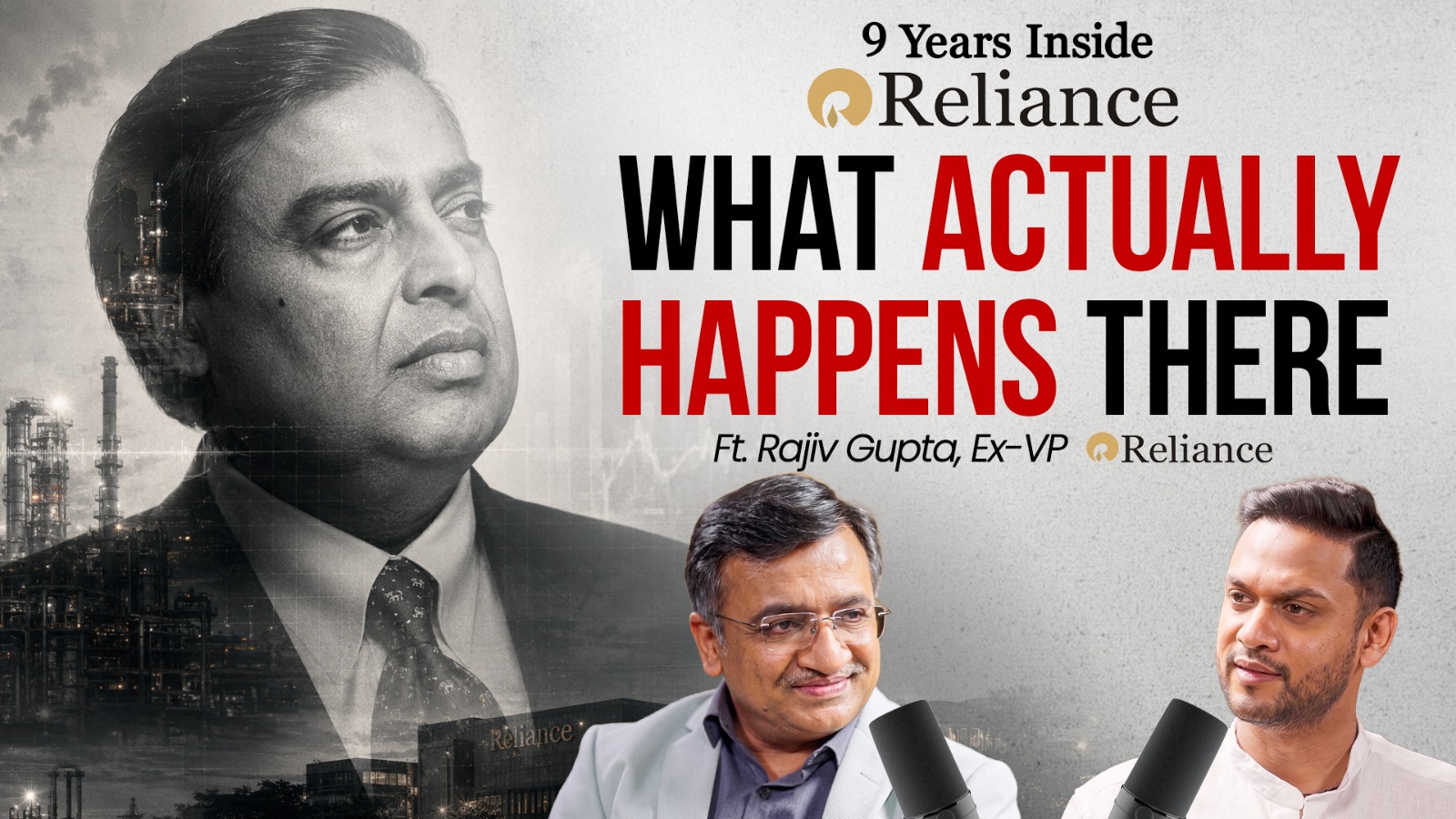
A conversation with Rajiv Gupta made me rethink what actually breaks Indian family businesses, and it’s not what most people blame it on.
I’ve now sat across the table from enough next-gen leaders, founders, and the professionals caught in between them to notice a pattern. Everyone blames the wrong thing. Founders blame this generation for being impatient. Next-gen blames old thinking. Professionals blame politics. Rajiv Gupta, who has been on every side of this triangle (as a professional, as an outsider CEO, and now as someone who trains next-gen leaders at Masters’ Union), said something in our conversation that reframed it for me entirely.
He wasn’t quoting himself. He was quoting a mentor who once told him plainly: “Companies are not run by speeches.” Not by promoter charisma, not by founder mythology, not by a next-gen kid’s big-vision energy on day one. Simple, and almost nobody in a family business actually runs on it.
That line is the trigger for everything below. Not a recap of what Rajiv said, but a case for what I think it actually means for how businesses in this country need to be built from here.
Three things Rajiv said that I can’t stop thinking about
One. On why next-gen leaders burn out trying to prove themselves fast, he put it simply: there’s a deep lack inside, and what looks like ambition is often just someone seeking validation. Not criticism. An X-ray. The 100-day plan, the reorg, the urge to show papa what you can do fast, most of it isn’t strategy. It’s an heir trying to buy legitimacy they were never taught how to earn slowly.
Two. On why first-generation founders lose good people, family and professionals alike, he said it without softening it: “I think they don’t understand that people need to contribute, and you’re killing that person’s energy.” Every founder who parks a successor on the shop floor “to observe” is running the exact playbook that killed their own motivation when someone did it to them decades earlier. Nobody breaks the cycle because nobody names it.
Three. On the daughters most family businesses quietly write out of the room, he didn’t dress it up. If a business defaults its next-gen daughters into CSR simply because that’s what daughters have always been given, it isn’t tradition. It’s a decision, made badly, by refusing to decide at all. Give her a real seat: equity clarity, a formal advisory or director role, something on paper. Or admit you never intended to give her one.
What this actually tells us about building businesses today
Here’s my read, and it’s the reason this conversation stayed with me longer than most.
Succession isn’t a handoff. It’s a design problem, and almost nobody designs it. We talk about family business failure like it’s a personality clash: strict father, impatient son, resentful uncle. It isn’t. It’s the absence of a system. No orientation plan for the next-gen. No KPI-and-mandate clarity for the outside professional. No documented equity conversation with the daughter before she finds out from a lawyer after the will is read. Every “family drama” story Rajiv told me was actually a governance vacuum wearing an emotional costume.
That reframes who’s at fault. It’s fashionable right now to say the next generation is entitled, too foreign-educated to respect how the business actually runs. It’s equally fashionable for next-gen leaders to say their parents are dinosaurs who can’t let go. Both are true in places, and both are beside the point, because neither is fixable by a better attitude. What’s fixable is structure: a documented first hundred days, a written delegation of authority, an honest conversation about who gets what and why. The boring paperwork nobody wants to be the one to bring up first.
The businesses that survive the transition aren’t the ones with the most talented next-gen or the most generous founder. They’re the ones where somebody, anybody, decided ambiguity was more dangerous than confrontation, and killed it early.
The line I keep coming back to
Legacy is inherited. Leadership is built. Everyone in a family business already knows that, in theory. What almost nobody accepts is the harder version of it: governance is a decision, not an inheritance. You don’t get handed a system that works. You have to choose, deliberately, in writing, to build one. And most families would rather fight than do that paperwork.
That’s the real crisis in Indian family business right now. Not succession. Design.
Every founder reading this has a version of the same choice sitting on their desk right now, undated and unsigned. Every next-gen leader reading this has a version of the same conversation they’ve been putting off for months. The businesses that make it to the next generation intact won’t be the ones that avoided the conflict. They’ll be the ones that had it early, on paper, before it had a chance to turn into a family story told at weddings for the next thirty years.